The pilot’s facial disfigurement
Kiss of the Spider WomanThe pilot’s facial disfigurement is the visible wound around which the story of the wounded flyer and the maid turns. A scar from battle changes the young man’s appearance, interrupts his former life as a pilot, and becomes the focus of rejection, shame, and self-alienation. Yet the story ultimately contests the authority of the face: the flyer and the maid recover their intimacy when they understand that love has allowed them to see one another’s souls rather than judge one another by their bodies.
The Wound and Its First Reactions
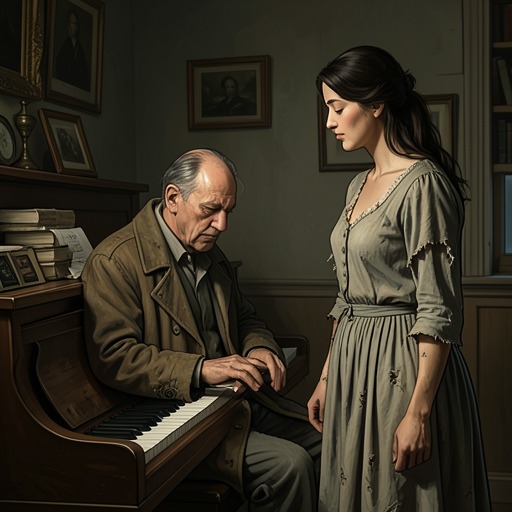
The flyer returns from battle with a scar that runs from his forehead across an eyebrow and eyelid, furrows into his nose, and continues down into the opposite cheek. The narration describes his face as crossed out, its expression a black, hostile look. His injury is not presented as a minor alteration: he suffers a nervous collapse, cannot return to the front, and rents a house where he can withdraw from other people.
The maid first remembers him as a handsome, fearless young man. When he arrives, she hurries to welcome him, but her involuntary gesture of disgust meets his dark expression. Her shame at having reacted so visibly accompanies his bitterness at being seen. He answers her with sharp commands, demanding that she bring what he asks for, leave him alone, and make no noise because he is tense. The disfigurement thus changes their first encounter from the maid’s eager anticipation into an exchange shaped by his isolation and her embarrassment.
The narration lingers on the scar’s exact path and on the distinction between a face remembered as lovely and the face now before the maid. That contrast makes appearance an unstable measure of worth: the maid’s former image of the flyer persists even as the injury becomes impossible to ignore. Her reflections on attractive faces are unsettled by the encounter, while the flyer’s rejection of company gives his altered appearance a social consequence as well as a physical one.
Seclusion and Growing Intimacy
The flyer shuts himself away from his parents and fiancée, refusing to see either. His parents visit but leave without reaching him; when his fiancée pleads to come upstairs and says the accident does not matter, he still refuses her. Her words do not overcome his withdrawal, and she departs abruptly. The story contrasts these visitors’ claims of affection with the isolation of the injured man, who does not want pity or contact on terms set by others.
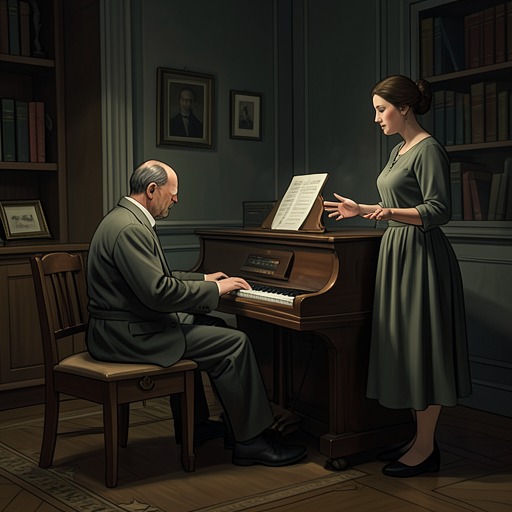
As winter gives way to spring, the flyer begins drawing trees and clouds outside. The maid brings him hot coffee and doughnuts in the forest and notices one of his drawings. The narration marks this encounter as a turning point: something in her response makes him recognize that she has a refined soul, though the remembered account cannot recover exactly what she said. Their connection grows through this recognition, not through a sudden alteration in either person’s appearance.
The flyer later proposes that they join their lives as friends under an arrangement: he has money that could provide security, and she could care for him, while neither expects love or joy. The proposal frames their closeness as practical and limited, but their relationship moves beyond the contract. They become lovers, conceal their happiness from the spinster, and go into the forest before dawn to watch the sunrise and kiss where no one will see them. Their secrecy shows how fragile their new intimacy feels, even before the flyer’s scar is again made decisive.
The Mirror and Rejection
The couple’s private happiness is interrupted when the flyer invites his parents to visit, announcing that he is nearly well and that they can meet his wife. The parents arrive expecting to find their son restored. Instead, they see the scar and the maid, whom they regard as an unsuitable bride because she is a servant with an ugly face and clumsy manners. Their disappointment exposes the social judgment that the couple had avoided while alone together.
The flyer looks to the spinster for confirmation that she still regards him as handsome. Her embittered expression offers no reassurance. The maid runs for a mirror, and the couple confronts their faces together: the scar is there, and the earlier enchantment seems to have disappeared. They retreat into darkness, unable to bear looking at one another. The parents’ car drives away toward the city; the maid returns to her former room, and the flyer destroys the self-portrait he had made, slashing the canvas to shreds while embracing her.
The mirror scene makes the disfigurement more than a mark that outsiders can judge. It becomes a crisis in the couple’s shared perception: each fears that the other now sees only the damaged body. Their flight from light and from one another reverses the closeness of their dawn meetings. The scar has not changed again, but the arrival of the parents forces the lovers to confront the standards by which they imagine they are being seen.
Love, Sight, and the Story’s Resolution
The blind man visits at autumn twilight and speaks to the couple in a darkened room, where all three are, in different ways, separated from ordinary sight. He argues that love has enabled the flyer and the maid to see one another’s souls rather than their bodies, and urges them to look at each other again without doubt. His counsel reframes the couple’s earlier happiness: it was not a deception that depended on their faces being beautiful, but a way of seeing made possible by their love.
The spinster reinforces this account while helping the maid comb her hair. She recalls that her own fiancé never returned from the trenches in France and says that he would still find her beautiful because he died loving her. The flyer then takes the maid’s hand, removes her ring, and writes their names in the window glass. He caresses her hair and skin; they smile and kiss. The ending restores their tenderness without removing the scar or changing the maid’s appearance. Their reconciliation depends instead on accepting the loving perception that had first joined them.
Narrative Role
Molina recounts the embedded film story to Valentin, and its emotional turns are carried by repeated contrasts between faces, sight, and intimacy. The flyer’s injury first makes him an object of pity and rejection, then tests whether his relationship with the maid can survive the return of public judgment. The blind man’s intervention and the spinster’s memory offer parallel forms of testimony: both insist that appearance does not exhaust what another person can see.
The story also refuses a simple cure narrative. The flyer’s scar remains, and his recovery is not described as a restoration of his former face. What changes is the couple’s ability to face one another after shame and fear have driven them into darkness. By making that renewed act of looking the resolution, the tale treats the disfigurement as a lasting condition whose meaning is shaped by relationships, rather than as an injury that must vanish before love can continue.